Bedding Guide
Bespoke Sheets: How to Specify the Right Fit, Fabric, and Finish
Well-made sheets can make a bed feel considered from the first touch to the final tucked corner. If you are ordering bespoke bed sheets, the best results begin with precise measurements and a few clear decisions about fabric, construction, appearance, and care. Here’s how to translate your preferences into a specification that feels personal—and works beautifully in everyday life.
What makes a sheet bespoke?
Bespoke sheets are made or adjusted to suit a particular bed, mattress, or set of preferences rather than relying entirely on standard sizing. That can mean a fitted sheet cut for a deep mattress, a flat sheet with a generous tuck, pillowcases sized for less-common pillows, or finishing details selected to complement the rest of the bedroom.
The word “bespoke” can cover different levels of customization. In some cases, it describes a fully made-to-measure order. In others, it means choosing from a brand’s available sizes, fabrics, colors, and finishes. Before requesting a quote or placing an order, ask what can actually be changed: dimensions, fabric, hem treatment, embroidery, closure, or all of the above.
There is no single ideal specification. The right one depends on the mattress, how you make the bed, how the sheets feel against your skin, and how much time you want to spend caring for them. A beautiful fabric that is difficult to launder may not suit a busy household, while a practical sheet that never stays in place may be a poor fit for a tall mattress. Bespoke choices are most successful when they solve a real problem as well as looking appealing.
Start with careful mattress measurements
Accurate measurements are the foundation of a well-fitting fitted sheet. Mattress labels often list a standard size, but that name does not account for every difference in thickness, pillow-top construction, or added topper. Measure the bed you will actually dress, rather than relying solely on the size printed on a receipt or product tag.
Measure length, width, and depth
Use a flexible tape measure and record the mattress’s length and width from edge to edge. Measure depth from the mattress base to its highest sleeping surface. If you use a topper, include it in the total depth or measure the assembled bed, with the topper in its usual position. A fitted sheet has to cover the full stack it is expected to hold.
For an irregular mattress, measure more than once. Some beds are slightly rounded, tapered, or wider at one end, and a single measurement may miss those details. Note any unusual shape or features when speaking with the maker. If the mattress sits inside a frame or has a pronounced pillow top, describe that too; the context can help clarify how the sheet should be cut.
Account for the mattress protector and topper
A mattress protector adds height and can affect how securely a fitted sheet grips the corners. If you always use one, measure with it in place. Do the same for a topper. An extra-deep pocket may sound like a safe choice, but excess fabric can bunch beneath the mattress and make the surface less smooth. The goal is enough depth to cover and tuck securely, not simply the largest pocket available.
Ask how the maker defines pocket depth. Some specifications refer to the vertical depth of the mattress, while others include extra fabric intended to tuck underneath. Confirm whether the measurement includes the seam or elastic casing and whether the stated depth is a maximum mattress depth. These details can prevent an expensive mismatch.
Choose the right elastic and corner design
Fitted sheets may use elastic around the entire perimeter or only at the corners. Full elastic can help keep the sheet in place, while corner elastic may make removal and dressing easier on some beds. The best option depends on the cut, mattress depth, and fabric’s behavior. If you tend to wake up with a corner pulled free, mention that when specifying the sheet.
For an adjustable bed or a mattress that moves frequently, fit is especially important. Describe how the bed is used and ask whether the proposed construction is suitable. A fitted sheet that is comfortable on a stationary mattress may shift when the head or foot is raised.
Plan flat-sheet dimensions and pillowcase details
Flat sheets offer more flexibility than fitted sheets, but their dimensions still shape the finished bed. Consider how much fabric you like at the sides and foot, whether you tuck the sheet beneath the mattress, and how much room you want to fold back at the top. A deep mattress, thick duvet, or layered blanket may call for a larger sheet than a standard set provides.
Think about your bed-making habits, not just the look in a showroom. If you prefer a crisp hotel-style fold, allow enough fabric for a substantial turn-down. If you rarely tuck in the flat sheet, you may prioritize a smooth drape instead. When requesting custom dimensions, state whether measurements refer to the finished sheet or include a hem allowance; a maker should clarify this before production.
Pillowcases are another opportunity to get the details right. Measure the pillow itself, including its loft when fluffed, and note whether it is standard, queen, king, Euro, or an unusual shape. A case that is too tight may compress the pillow and strain the seams. One that is too generous can look loose and allow the pillow to shift inside.
Ask whether the case has an envelope closure, a simple open end, or another construction. Consider the cuff width, flange, or decorative edge as well. These details change the visual proportion of the pillow and can affect how the case fits beneath a sham or other decorative layer.
Choose fabric by feel, performance, and routine
Fabric is not just a question of softness. Fiber, yarn, weave, weight, and finishing all influence how sheets feel, drape, breathe, and respond to washing. If you can, handle swatches in person. A sample gives you a better sense of texture and weight than a photograph or a fiber label alone.
Linen: relaxed texture and an easygoing drape
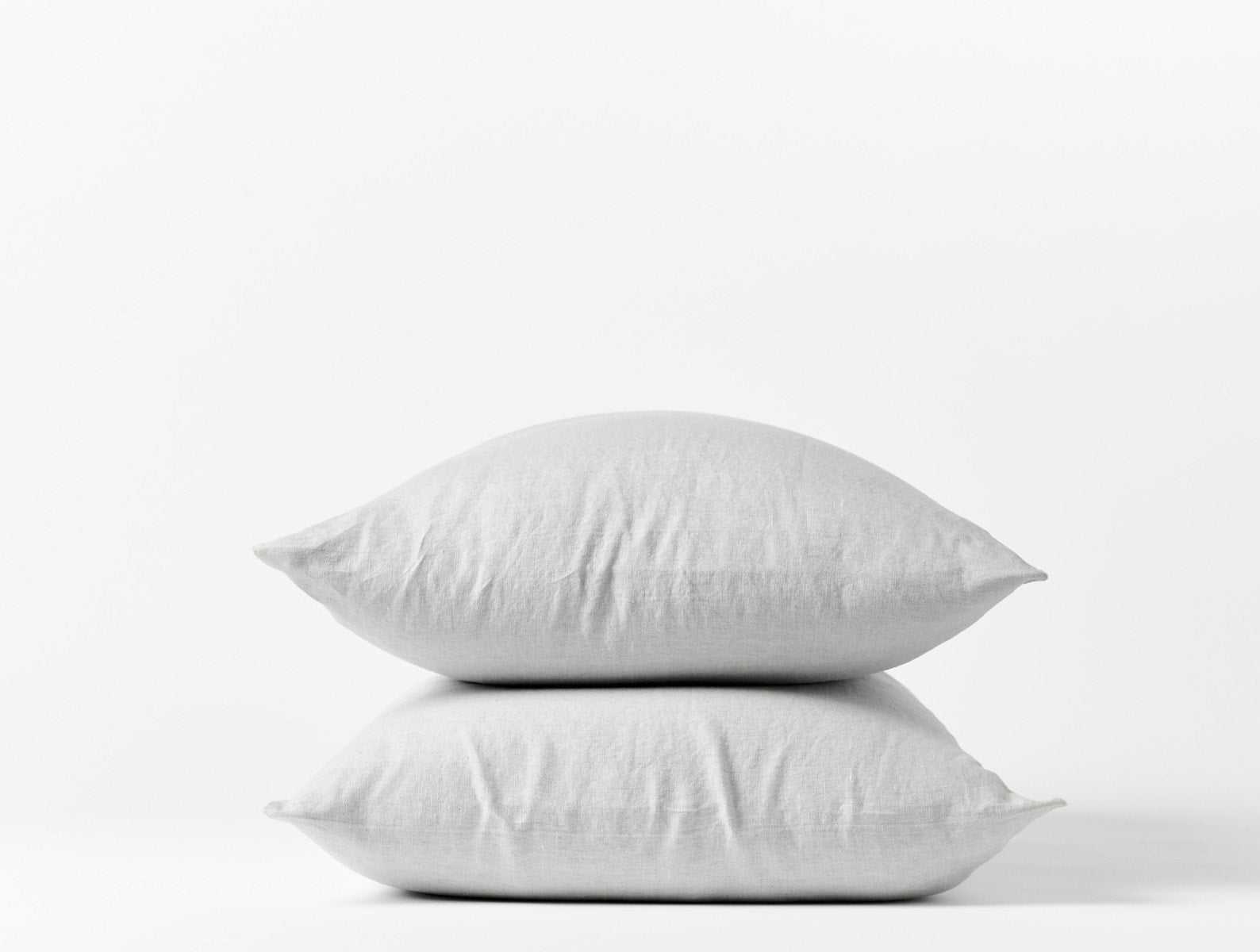
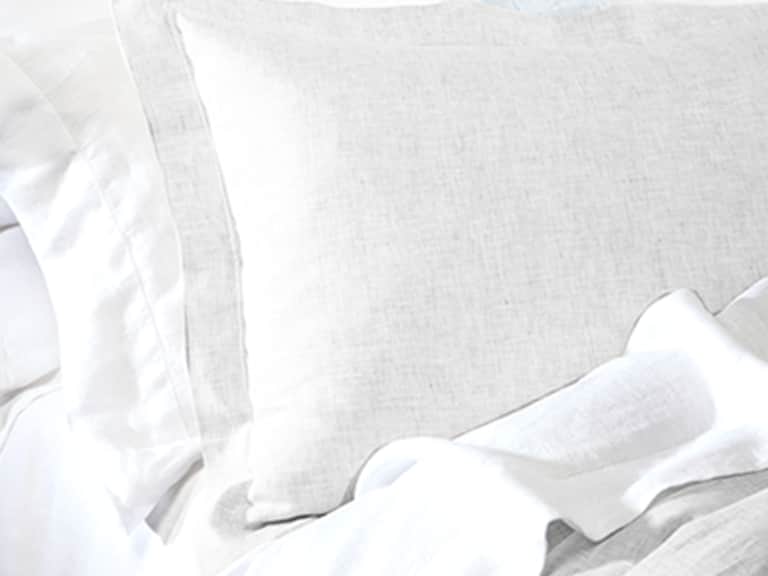
Linen is made from flax and is known for its distinctive texture and relaxed appearance. It often feels more textured at first than a smooth cotton sheet, and it softens with use and laundering. The slightly irregular surface is part of its character, not necessarily a sign of poor quality. Many sleepers appreciate linen’s airy feel and casual drape, though preferences vary.
When comparing linen, ask about fabric weight, finish, and care. A prewashed or stone-washed fabric may feel more relaxed from the start. Unwashed linen can have a firmer hand initially. Neither is automatically superior: the choice depends on whether you want a softened look immediately or are comfortable with the fabric changing gradually through use.
Cotton percale: crisp and matte
Percale describes a closely woven construction often associated with a crisp, matte surface. Cotton percale is a familiar choice for people who enjoy a clean, cool-to-the-touch feel. It can soften over time without losing its character, although the actual hand depends on the cotton, yarn quality, weave, and finishing—not the weave name alone.
Thread count is one specification, but it should not be treated as a complete quality score. A higher number does not automatically mean a better sheet. Fiber length, yarn preparation, construction, and finishing all matter, and different makers may calculate or present thread count in different ways. Ask for the full fabric description rather than relying on a single number.
Sateen: smooth surface and subtle luster
Sateen is a weave structure that typically creates a smoother, more lustrous face than percale. It may feel supple and fluid, making it a good option for someone who prefers a polished surface over a crisp one. Because the surface construction differs, care and wear characteristics may also differ by fabric. Request the manufacturer’s washing guidance and consider how the fabric will fit into your regular routine.
Blends and alternatives
Some sheets combine fibers to balance different qualities, while others use cotton, linen, or another material on its own. Read the fiber content carefully: “linen feel” or “cotton touch” is not the same as a clear statement of fiber composition. If natural fibers or a particular origin matter to you, ask the maker to identify the fiber and explain what is documented about its sourcing.
Finish the specification with hems, color, and construction
Finishing details can make a sheet feel tailored without making it fussy. A plain hem creates a restrained edge; a hemstitch, embroidery, piping, or flange can add definition. For everyday sheets, consider whether decorative work will feel comfortable against the skin and whether it requires special laundering. A detail that looks lovely on a pillowcase cuff may be less practical on the part of a sheet that folds beneath the chin.
Color is another functional choice as well as a design decision. White and pale shades make a bed look bright and coordinated, while deeper colors can add contrast or disguise everyday marks. Ask whether the fabric is piece-dyed or yarn-dyed if that information is available, and confirm any recommended care for dark or saturated colors. Separate washing may be advised, particularly at first.
Construction deserves attention, too. Ask about seam placement, seam allowance, corner shaping, and whether the edges are reinforced. These details affect how the sheet behaves through repeated washing. For custom embroidery, provide exact wording, capitalization, placement, and preferred thread color in writing. A clear, approved drawing or order confirmation can prevent misunderstandings before the fabric is cut.
Use Sferra as a reference point—not a substitute for specifications
Sferra is a familiar name in the refined bedding category and can serve as a useful reference when you are learning how premium sheet construction is described. Looking at established linen and bedding collections can help you notice the details that matter: fiber, weave, finish, dimensions, hems, and care guidance. Those details are more informative than a label such as “luxury” on its own.
When comparing bespoke bed sheets with ready-made options from a brand such as Sferra, focus on the actual specification rather than assuming that a particular maker or price point guarantees a perfect fit. Check the finished measurements, fabric description, and care instructions. A beautifully constructed standard sheet may still be wrong for an unusually deep mattress; a custom sheet may fit that bed precisely but use a fabric or finish that does not match your preferences.
Use brand examples to clarify what you value, not to copy a specification without checking your own bed. If you like the crispness of one fabric or the clean edge of a particular finish, describe that preference to the custom maker in plain language. Swatches, written measurements, and confirmed details are the most useful tools for turning an impression into an order.
Make care part of the decision
Before settling on a fabric, ask how it should be washed and dried. Check the suggested water temperature, cycle, detergent restrictions, and whether line drying or low-heat tumble drying is recommended. If the instructions call for a delicate routine you are unlikely to follow, choose a more practical option or confirm whether the fabric can tolerate your normal laundry habits.
Avoid assuming that every natural-fiber sheet should be treated alike. Linen, cotton percale, and cotton sateen can have different care needs, and dyes or decorative finishes may change the recommendations. Follow the instructions supplied with the finished item. When in doubt, a gentler cycle, mild detergent, and avoiding excessive heat are sensible questions to raise with the maker, but the product’s specific guidance should take priority.
Ask whether the fabric may shrink and whether it has been prewashed or pre-shrunk. A maker should account for expected shrinkage when cutting a custom piece, but it is important to understand what happens after the first wash. Also ask how to handle stains and whether ironing is optional, recommended, or likely to affect the finish.
A practical checklist before you order
Custom work is easier when all the essentials are in one place. Before approving a quote, review your notes and make sure the maker has confirmed the following:
- Mattress length, width, and depth, measured with the usual topper and protector in place.
- Fitted-sheet pocket depth, including how the maker defines and measures it.
- Flat-sheet finished dimensions and the overhang or tuck you prefer.
- Pillow dimensions, case style, cuff or flange details, and closure type.
- Fiber content, weave, fabric weight if available, and any prewashing or finishing.
- Color, edge treatment, embroidery, and exact placement of decorative details.
- Seam and corner construction, elastic design, and any special fit requirements.
- Care instructions, expected shrinkage, production timing, and the policy for approved custom orders.
Ask for the final measurements and fabric choice to appear on the order confirmation. If the project includes embroidery or a distinctive finish, request written approval of the layout before production begins. Small clarifications up front are far easier than trying to correct a fit or design issue after the sheets arrive.
The best bespoke sheet is the one that fits your real life
Specifying bespoke sheets does not require a technical vocabulary or an elaborate design plan. Start with the bed in front of you: measure it accurately, describe how you use it, and be honest about the texture and finish you enjoy. Then weigh those preferences against care, durability, and the details of construction.
That thoughtful process is what turns custom sizing into genuine comfort. A well-measured fitted sheet stays where it belongs; a carefully chosen fabric feels right night after night; and a considered finish gives the bed a quiet sense of intention. Whether your reference point is crisp percale, relaxed linen, or the refined language of a maker such as Sferra, clear specifications help you choose with confidence—and make the finished bed feel like it was made for you.